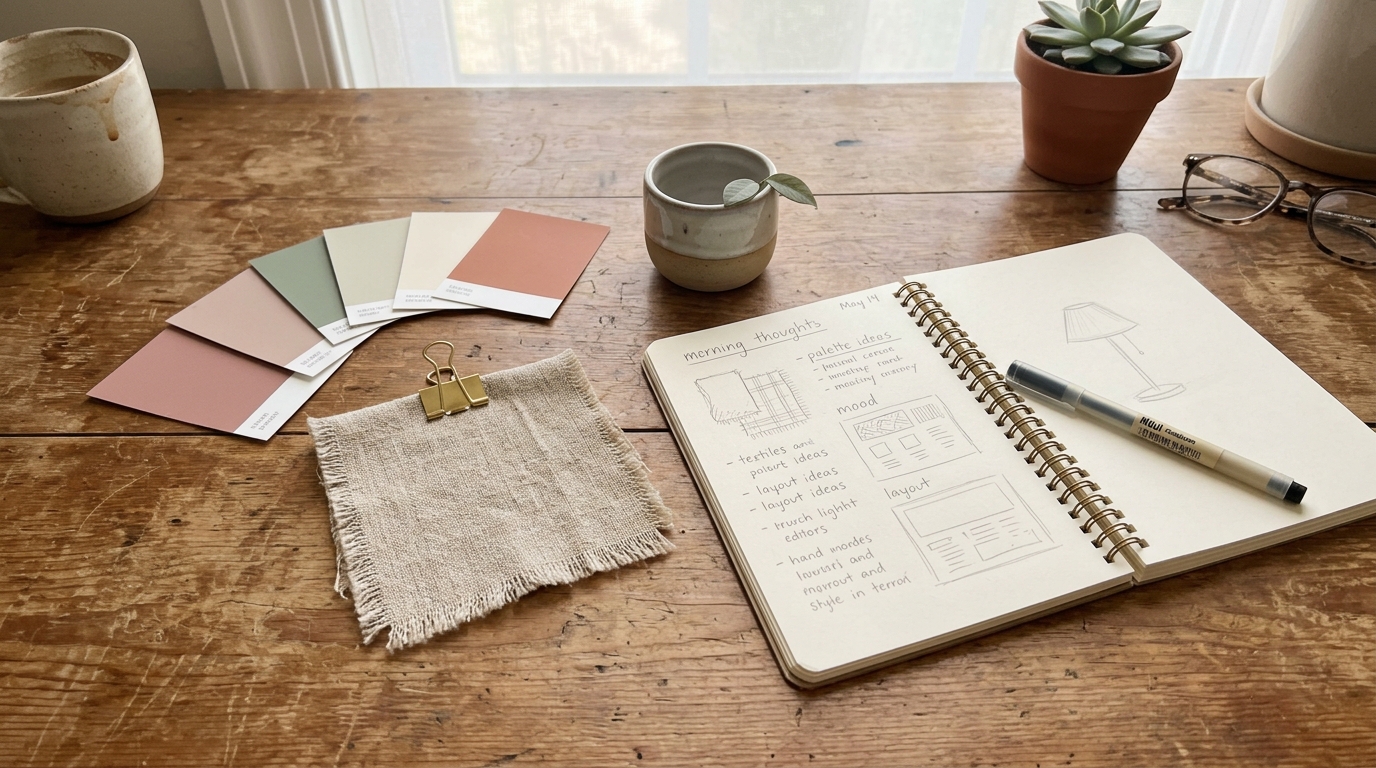
"Branding" is one of the most misused words in dropshipping. Most beginners think it means picking a fonts and buying a nice logo. That's visual identity — a small surface of the thing. Real branding is the system that turns a generic product into something specific people seek out, trust, and recommend.
In a market where every product has 20 copycats on Amazon within 60 days, real branding is the only durable moat a dropshipping store has. The stores selling for 3–5x annual profit on Flippa and through private buyers all have it. The stores that die at month 8 never built it.
Why most dropshipping 'brands' aren't
Spot the fake brand with this checklist. A real brand can answer these in one specific sentence each:
- Who is this specifically for?
- What problem does it solve that no one else solves this way?
- What's the promise you make that you will not break?
- How does interacting with this brand make the customer feel?
- Why does this brand exist, beyond making money?
Most dropshipping stores can't answer any of these. "It's a dog vest, for people who have dogs, that helps with anxiety" is a product description, not a brand. The brand version sounds like: "It's for working parents whose rescue dogs panic during the 6pm construction noise — from a team that personally rescued two anxious dogs and couldn't find anything that worked." Same product. Completely different positioning. The second one converts at 2x the rate and sells for 3x the AOV.
The four layers of a real brand
Think of brand as a stack. Each layer supports the one above. Most dropshippers only build the top one and wonder why it doesn't hold up.
| Layer | What it is | Time to build |
|---|---|---|
| 4. Visual identity | Logo, fonts, colors, photography style | 1–2 days |
| 3. Voice and tone | How you talk — in copy, email, support | 1 week to define |
| 2. Positioning | The specific claim you own in your category | 2–3 days of thinking |
| 1. Promise and values | What you will (and won't) do for customers | 1 weekend |
Layer 1: Promise and values (the foundation)
This is the one sentence that governs every decision. "We promise [specific outcome] to [specific audience], and we'll never [specific compromise most competitors make]."
Example from a real winning store: "We promise working parents that their kid's sleep struggles are solvable in 30 days — and we'll never sell a product we haven't personally used on our own kids for a month first." The second half of that promise kills 90% of potential SKUs and is exactly why the brand trusts.
Layer 2: Positioning
The specific claim you own. Not "we have great products" (nobody owns this). The positioning is a differentiated, memorable, claim-able statement.
Good positioning is a crossover of two attributes, not one. "The calming vest brand" is already taken. "The calming vest brand for rescue dogs with trauma" is narrower and your own. Narrow wins.
Layer 3: Voice and tone
A one-page document that answers: "What do we sound like?" Casual or formal? Funny or earnest? Expert or peer? You need to pick, because consistency across 100 emails and 500 ad headlines is what makes a brand feel real.
The shortcut: write 3 sample emails from your brand and 3 you admire. What makes them sound like them? Borrow structure, not specific words.
Layer 4: Visual identity
Only now do you pick logo and colors. Because now the visual identity has a job: to reinforce layers 1–3, not replace them.
The $500 brand budget
Every dollar of a $500 brand budget, spent in priority order:
Total: $500. Everything else is free and falls under "thinking carefully for a weekend": writing your promise, defining positioning, drafting a voice guide. Most dropshippers skip these and immediately spend $300 on the logo, getting the sequence exactly backwards.
If you only spend money on one thing, spend it on packaging inserts. A printed thank-you card ($0.30/unit) that names the founder, references the promise, and shares the brand story is the single highest-ROI branding spend in dropshipping. It's also the one thing Amazon competitors can't copy because they don't have direct fulfillment control.
What drives conversion vs what doesn't
Not all brand elements move the needle equally. Here's the honest ranking:
| Element | Impact on conversion | Priority |
|---|---|---|
| Clear positioning (above fold) | Huge (15–30%) | Critical |
| Consistent voice across touchpoints | Strong (8–15%) | Critical |
| Founder/brand story on product page | Strong (5–12%) | High |
| Trust signals (real address, photos) | Strong (5–10%) | High |
| Custom packaging/inserts | Moderate — affects repeat rate | Medium |
| Logo design quality | Low on conversion, matters for trust above a threshold | Medium |
| Color palette sophistication | Low, beyond "not ugly" | Low |
| Custom font | Almost none | Nice-to-have |
Notice what's at the top: positioning and voice. The strategic choices, not the aesthetic ones. The aesthetic ones matter — ugly brands don't scale — but they're hygiene, not leverage.
The 3-year payoff
Real brand-building doesn't pay off in month one. It pays off when you try to sell the business in year three.
A dropshipping store with $100K/year net profit and no brand sells for roughly 1–1.5x annual profit ($100K–$150K) on Flippa — if it sells at all. The same store with a brand, a loyal list, a defined positioning, and a creator roster sells for 3–5x annual profit ($300K–$500K) through private brokers. That's a $250K+ difference, just from doing the branding work.
A brand is what lets you charge more, retain longer, and eventually sell. Without one, you're running an arbitrage business until the arbitrage closes.
Branding isn't optional work you get to once you're big. It's the work that determines whether you ever get to big. The operators running $100K+/month stores invariably started with a specific positioning and a real promise — long before they could afford the good logo.